

The Fallacy Of The Shitty First Draft
Why the language we use when we’re trying to protect ourselves from the discomfort of beginning matters.

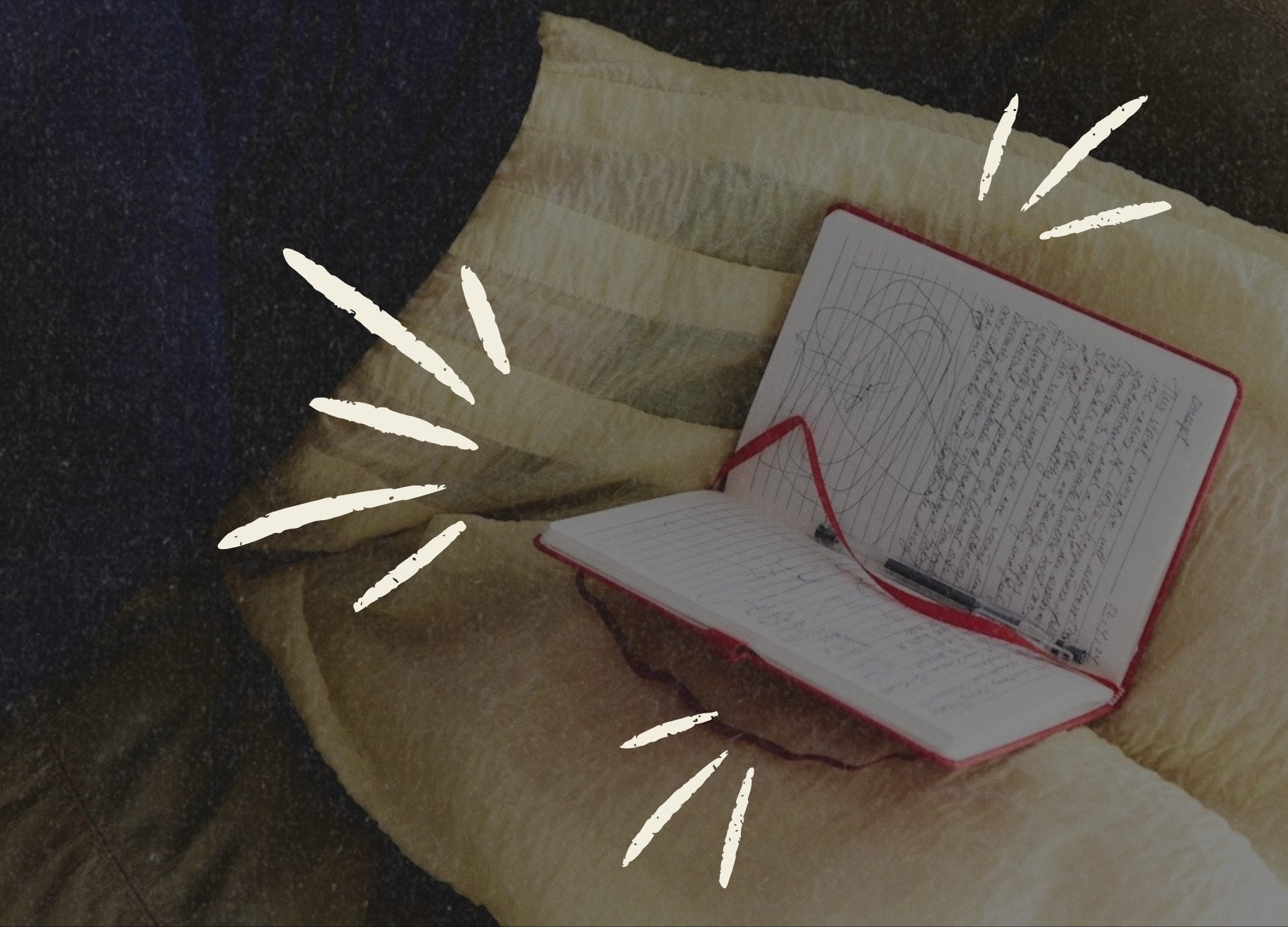
If you’re a writer, author, or dream of finally getting your words onto a page of some kind, you’ve probably been given this advice before:
Expect your first draft will be shitty.
Write the shitty first draft, then edit later.
I mean..this isn’t wrong. Your first draft won’t be the quality of your final draft. And you will go through edits, multiple rounds. That is all to be expected.
But as someone who’s spent the last two decades studying self-talk — I NEVER refer to anything I do as the “shitty first draft.”
The words we use are powerful. That’s why pre-labeling your first draft “shitty,” while well intentioned, misses the mark.
We only see what we focus on, and we only know to aim for what we pay close attention to. So naming something “shitty” before it even exists sets your focus and aim.
In some ways, some times, this might be a good thing. And/but/also:
If you focus on writing a “shitty” first draft, you might subconsciously hold yourself back from discovering your baseline. If you’re aiming for a “shitty” first draft, then you might create something that’s not only well below your standards — you might also miss the chance to surprise yourself with what you’re capable of.
As a writer, I recognize there are enough external factors that already exist that often feel like they’re working against me. Time, clout, comparison, the industry being the industry…forces outside my head that I can’t change or have very little control over. I refuse to add more obstacles to that list. And I refuse to kick myself down before I even start, just because I suspect difficulty might be coming.
This, of course, is easier said than done. I can “refuse” to do these things, but that negative self-talk can still creep in, threatening to keep me stuck — or worse, turn all my plans around completely so they’re headed for the EXIT sign.
So the more accurate phrase would be: I refuse to let my first instinct be my final one.
I never aim for or expect “shitty.”
Instead, I aim for and expect: BASIC.
Do not confuse the cringe of beginning with evidence that you shouldn’t continue.
CHECK YOUR WORDS
Shitty implies bad.
Basic implies simple.
Not good, not bad — simple.
If you’re like me and tend to over-complicate things — on the page, in your brain, in your heart — then sometimes basic is EXACTLY where your focus serves you best at the beginning of your journey.
Remember that doing something simply isn’t the same as doing something shittily. Simplicity is sometimes the most powerful communicator. On the flipside, if you tend to lean toward overcomplication, that’s also not doing it shittily. It’s giving your future self a lot of goodness to work with.
Calling something you create “shitty” before anyone else can is often a form of self-protection. It’s the same mentality behind making a self-deprecating comment: if you say it first, it won’t hurt as much if someone else points it out. If you lower your own expectations down to the ground, it won’t sting as much if you can tell yourself you knew it was coming.
Instead of expecting to spend your time, energy, and emotions editing “bad” into “good,” expect to expand up on the basics, finding new gems along the way.
Give yourself the opportunity to expand on the simplicity you outlined, instead of pre-expecting to spend your time, energy, and emotions editing “bad” to “good.”
For members of the Self-Talk Studio:
A SELF-TALK SCRIPT FOR THE FIRST DRAFT SPIRAL
Use the following reminders, self-talk scripts, and action items when you’re in the part of the creative process where the draft technically exists (or is in process of existing), but your brain has already decided it’s any number of uncomfortable things: humiliating, pointless, too obvious, too messy, too late, too much, not enough, proof everyone else is better than you are, proof you’re not a “real” writer, or proof that you were “never really that good at this in the first place.”
Do not confuse the cringe of beginning with evidence that you shouldn’t continue.
Here we go:
